
Do you remember the Monopoly Man having a monocle, Darth Vader saying “Luke, I am your father,” or chartreuse being pink? Then chances are, you’ve experienced the Mandela effect.
You’re a part of a larger group of people (basically everyone) who have collectively misremembered an event, a person, historical facts, a character detail, or even a movie quote!
And below are 100 Mandela effect examples that might just surprise you in 2026. Some of them are well known: I mean a lot of people have already brought up Pikachu’s tail color or the Berenstain Bears spelling. But some of them aren’t as well known! You might just be as surprised as I was when I created this Mandela effect list. It made me feel like I had a pretty bad memory or like I was living in some alternate timeline.
So if you’re ready to have your memory tested, then keep reading and see if this 100 Mandela effect list really does shock you!
In This Article:
- What is the Mandela Effect?
- Why Does the Mandela Effect Happen?
- Famous Mandela Effect Examples
- Popular Mandela Effects
- Common Mandela Effects
- The Most Shocking Mandela Effects
- Mandela Effect Movie Quotes You’ve Been Saying Wrong
- Mandela Effect Cartoons That’ll Blow Your Mind
- Mandela Effect Brands and Logos You Got Wrong
- The Mandela Effect in Pop Culture
- Lesser Known Mandela Effect Examples
What is the Mandela Effect?
The Mandela Effect is when a group of people have a shared memory around a certain topic, but that memory was never real.
The term was coined when a woman named Fiona Broome remembered Nelson Mandela dying in prison in the 80’s. But he was actually later elected president and died in 2013. And to her surprise, she wasn’t the only one who misremembered this event and so she started to study this phenomenon.
Why Does the Mandela Effect Happen?
Memory isn’t a video recording; it’s more of a reconstruction. Every time you recall something, your brain is trying to piece it back together, and it doesn’t always get it right.
Here are a few specific things that make the Mandela Effect worse:
Your brain is filling in the blanks. When details are kind of fuzzy, your brain unconsciously makes something reasonable up to fill in the gap. This is called confabulation, and you won’t even realize it’s happening to you.
Other people’s memories become your memories. When you hear someone else confidently misremember something, it can sometimes rewrite your own memory. This is why Mandela Effects spread so fast on social media; the more people talk about a false memory, the more real it feels to everyone who reads about it.
Your brain tends to rely on stereotypes. Instead of storing every single detail perfectly, your brain uses mental shortcuts called schemas. So for example, when you picture the Monopoly Man in your head, your brain pulls from its general idea of “wealthy old gentleman with a top hat” which includes a monocle, even though he’s never worn one.
Where you learned something gets mixed up. Sometimes your brain remembers that it knows something but forgets where it even learned it, which has you mixing up similar things (like Kazaam and the nonexistent Shazaam).
Here’s the short version: The Mandela Effect isn’t some kind of proof of alternate timelines, it’s just evidence that human memory is way less reliable than you think. It’s shaped by factors like mental shortcuts, suggestions, and social influence.
Famous Mandela Effect Examples

1. The Spelling for Chick-fil-A
Quite a few fans of this fast food restaurant think it’s either spelled “Chic-fil-A” or “Chik-fil-A,” but it’s just Chick-fil-A.
Explanation for This Mandela Effect: The name is a pun on “chicken fillet,” but the cute spelling makes it pretty easy to misremember. “Chic” feels like a reasonable alternative because it sounds identical and is a real, commonly seen word. And most people take in the brand with what they hear from ads rather than closely reading the logo.
2. Shazaam, the Nonexistent Genie Movie With Sinbad
Many remember a movie from the 1990s starring Sinbad as a genie. But it never really existed. It was probably confused with the movie Kazaam, starring Shaquille O’Neal.
Explanation for This Mandela Effect: This is probably one of the most debated Mandela Effects ever. Sinbad did dress as a genie for a 1994 Sinbad-hosted TV event, and the name “Shazam” was culturally prominent. Also, combined with Kazaam starring another similarly famous celebrity, the brain ended up combining these bits into a false movie memory that feels really real.
3. Mr. Rogers’ Theme Song, “It’s a beautiful day in this neighborhood”
The lyric is actually sung with “this neighborhood,” not “the neighborhood,” contradicting how a lot of people (including myself) remember the intro.
Explanation for This Mandela Effect: “The neighborhood” is grammatically the more natural phrase in English, so your brain ends up swapping it in automatically.
4. Forrest Gump’s Line, “Life was like a box of chocolates.”
A ton of people quote it as “Life is like a box of chocolates,” but the real line is in the past tense. Again, another one I misremembered!
Explanation for This Mandela Effect: When people quote something as a general life truth (or a proverb), they tend to use present tense. But the past tense in the actual line is contextually specific to Forrest talking about his mom.
5. Ricky Saying, “Lucy, you have some ‘splaining to do!”
This is so weird because I (and a lot of other people) thought Ricky always said this line. But it’s simply just, “‘Splain that if you can.”
Explanation for This Mandela Effect: The misquote is actually a lot better of a catchphrase. It’s more direct, more quotable, and easier to use in everyday conversation. Also, pop culture impressions and parodies repeated the invented version so many times that it ended up replacing the original entirely.
6. “If you build it, he will come” Line from Field of Dreams
People tend to misquote it as “they will come,” but the line refers to just one person. Who knew!
Explanation for This Mandela Effect: “They will come” sounds like a broader, more inspirational quote, like the kind of thing you’d put on some motivational poster.
7. “We are the Champions… of the world!” Queen Lyric
The song doesn’t actually end with that line, but that’s how a lot of people remember Freddie Mercury singing it.
Explanation for This Mandela Effect: There’s a famous live performance where “of the world” is added, but in other versions (like what you’ll see on iTunes), it’s just not there. Also, on top of that, people are remembering a repeated lyric from earlier on in the song and incorrectly placing it at the end.
8. King Henry VIII Holding a Turkey Leg
Some people vividly remember a painting of the king holding a turkey leg, but it never existed.
Explanation for This Mandela Effect: Henry VIII is kind of (totally) synonymous with excess and feasting, so a turkey leg feels like a perfectly fitting prop.

9. Cinderella’s Castle at Disneyland
A lot of people believe Cinderella’s Castle is in California’s Disneyland, but it’s actually in Walt Disney World Florida. Disneyland has Sleeping Beauty’s Castle.
Explanation for This Mandela Effect: Cinderella is of course one of Disney’s most iconic princesses, so her castle feels like the default. And because both parks have a similar fairytale castle, the brain ends up filing them under one image + pairs the most famous princess to it.
10. Chartreuse as a Pink Color
A good number of people recall being taught that chartreuse was a pinkish hue, but it’s actually a pretty bright green. Same here!
Explanation for This Mandela Effect: The word “chartreuse” sounds kind of delicate and a bit floral, which makes pink feel obvious. Also, it’s a rarely used color word in everyday life, so most people have some sort of a vague impression of it rather than a precise one.
11. “Beam me up, Scotty” from Star Trek
I think this is a line we’re all not remembering correctly. In fact, it was just “Scotty, beam us up”.
Explanation for This Mandela Effect: The misquote is a lot cleaner, more commanding, and easier to say as a fun cultural reference!
More Ways to Entertain Yourself in 2026
- Interesting Facts That’ll Make You Realize There’s a Lot You Don’t Know
- Fun Party Games (Actually) Worth Playing at the Party
- Good Riddles to Make Any Hangout Or Game Night Way More Fun
Popular Mandela Effects

12. Nelson Mandela’s Death Happening in the 1980s
Many remember him dying in prison in the ’80s, despite him passing away in 2013.
Explanation for This Mandela Effect: The heavy emotional weight of Mandela’s imprisonment made it feel permanent and final. So when people learned that he had been released, it seems that a lot of brains just didn’t update the memory. And in the end, him dying behind bars felt tragically real, so it stuck.
13. Darth Vader Saying, “Luke, I am your father” in Star Wars
The real line is “No, I am your father,” but basically everyone remembers it the first way.
Explanation for This Mandela Effect: The word “Luke” probably made the line feel more dramatic, so your brain kind of naturally tacks it on. And once that wrong version started circulating in pop culture parodies and quotes, social reinforcement did the rest. So basically, the misquote became more famous than the actual line.
14. The Berenstain Bears vs. Berenstein Bears
So many readers recall this children’s book series being called, “Berenstein Bears,” but it’s actually, “Berenstain Bears.”
Explanation for This Mandela Effect: “Stein” is a lot more common of a surname ending than “Stain,” so our brains kind of just automatically filled in the more familiar spelling.
15. Curious George’s Tail
A lot of people really thought he had a tail, but he doesn’t!
Explanation for This Mandela Effect: Monkeys have tails, it’s as simple as that and a basic fact that everyone knows. So when the brain tries to reconstruct Curious George from memory, it automatically uses the “monkey schema” and adds a tail that was never really there.

16. The Monopoly Man’s Monocle
Despite your memories when playing the game, Mr. Monopoly never had a monocle.
Explanation for This Mandela Effect: The brain has an obvious schema for what a rich, old-fashioned gentleman looks like. So a top hat, mustache, suit, cane, and of course, a monocle. Also, Mr. Peanut (who actually does wear one) kinda reinforces this visual further. So basically your brain fills in the monocle because it fits the stereotype perfectly.
17. Gandalf yelling, “Run, you fools!”
I can actually say I never misremembered this one! The famous line is actually, “Fly, you fools!”
Explanation for This Mandela Effect: “Run” is probably the most natural word in a dangerous scenario, so it’s what our brains naturally substitute. “Fly” is a lot less obvious in context, making it the kind of detail that gets easily misremembered.
18. Pikachu’s Tail Having a Black Tip
The end of Pikachu’s tail is remembered by a lot of people as black, but it’s just yellow with a bit of brown at the base.
Explanation for This Mandela Effect: Pikachu’s ears have black tips, so your brain is going to apply the same pattern to the tail for visual consistency.
19. The Wicked Witch Saying, “Fly, My Pretties, Fly!”
Yep, I though this was the case, but the line in The Wizard of Oz is just simply, “Fly, fly, fly!”
Explanation for This Mandela Effect: “Fly, my pretties” is a much more creepy and memorable line, so it spread through pop culture and parodies for a hot minute. Also, on top of that, there’s a bit of blending with other lines in the movie because she does call them her “pretties.”
20. The Spelling of Febreze
People recall an extra “e” in the brand name, “Febreeze.” But it’s actually just, “Febreze.”
Explanation for This Mandela Effect: The word “breeze” is kind of embedded in the product’s concept and even its name. But the brand just chose an unconventional spelling. However, your brain defaults it to the correct spelling of the real word and overrides the actual logo every single time.
21. Fruit of the Loom’s Cornucopia
There is no cornucopia behind the fruit in the logo, but a lot of people remember it that way!
Explanation for This Mandela Effect: A cornucopia is one of the most common pairings when you see a group of fruits. So your brain is going to insert it there because it feels natural.
Common Mandela Effects

22. Looney Tunes vs. Looney Toons
If you grew up with this cartoon, you probably remember it being called, “Looney Toons.” Which does make sense for this cartoon, but it’s actually, “Looney Tunes.”
Explanation for This Mandela Effect: “Toons” is a common abbreviation for cartoons, so it feels like the obvious spelling. The actual name is a play on musical “Tunes” (basically a nod to the short musical films they had), but that context is lost on a lot of people, so the brain just defaults to the more intuitive version.
23. Oscar Mayer vs. Oscar Meyer
The real spelling is “Oscar Mayer,” but you might recall it as “Meyer,” which makes sense due to phonetics!
Explanation for This Mandela Effect: “Meyer” is a much more common spelling of that last name, so your brain ends up correcting it every single time. And since most people hear the name rather than study the label, the phonetic assumption ends up going unchallenged.
24. Cheez-It vs. Cheez-Itz
You might really remember there being a “z” at the end of “Cheez-Itz”” But the correct name is just “Cheez-It”.
Explanation for This Mandela Effect: The brand name already has an intentional misspelling (“Cheez” instead of “Cheese”), so the brain just assumes the whole name is playfully misspelled. “Itz” kinda just feels like a natural continuation of that pattern. Also, on top of that, there’s a plural expectation so the brain is going to pluralize the word.
25. C-3PO’s Silver Leg
A lot of Star Wars fans remember this famous droid as being entirely gold, but he actually has a silver lower leg!
Explanation for This Mandela Effect: C-3PO is so visually associated with his all-gold look that the one silver leg just simply doesn’t make sense or register. The brain keeps the more dominant look (gold robot) and discards the random feeling detail.

26. Double Stuf Oreos Being Spelled With Two Fs
Even though it would make sense for it to be spelled like that, “Double Stuf” is spelled with just one “f,” not two.
Explanation for This Mandela Effect: Plain and simple, “stuffed” is the obvious and natural word to use. And since most people never notice because they’re too busy eating the cookies to check out the packaging, the Mandela Effect sticks.
27. Froot Loops vs. Fruit Loops
Despite your better logic, this cereal has always been spelled as “Froot Loops.”
Explanation for This Mandela Effect: “Fruit” is the obvious + correct word and your brain knows it, so it autocorrects the unusual spelling every single time.
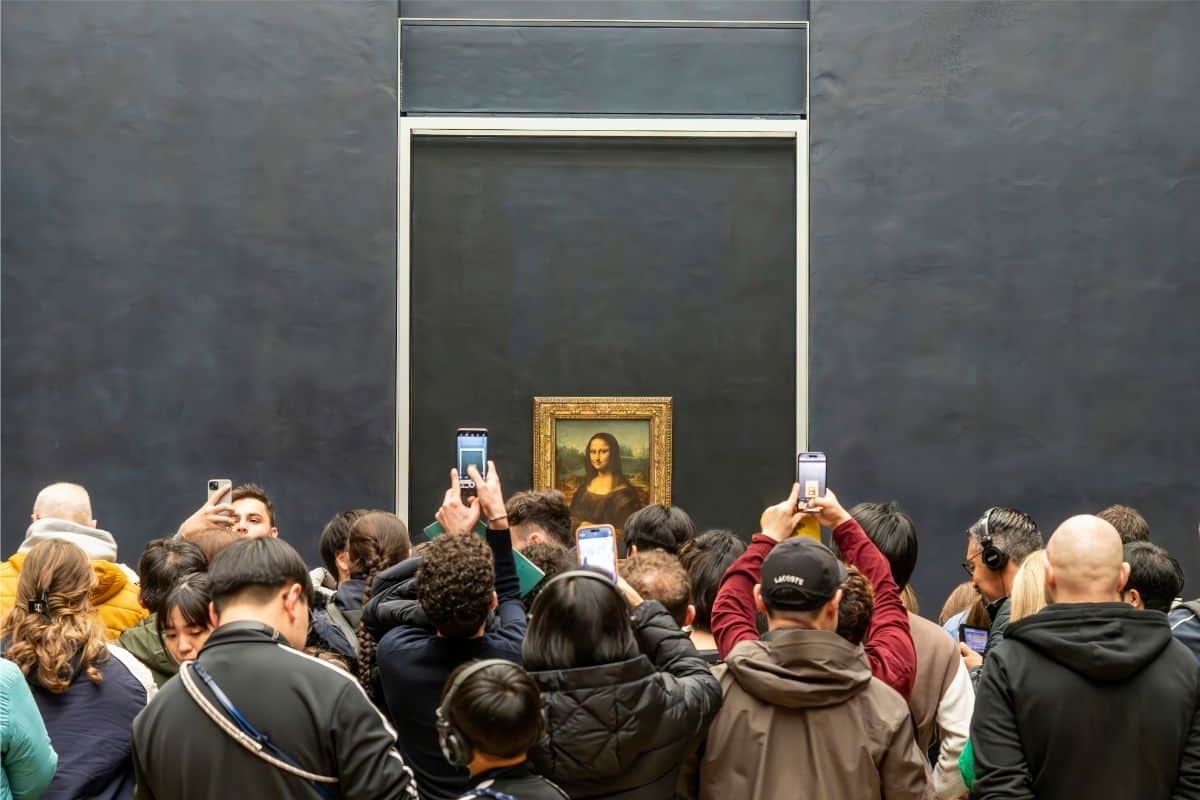
28. Mona Lisa’s Smile
A lot of people think that her smile was a lot more obvious, but now it’s subtler. Was there a change? Nope, it was always like that!
Explanation for This Mandela Effect: The Mona Lisa’s expression is of course ambiguous and can appear to change depending on how you view it. Combine this with years of cultural hype around her “mysterious smile,” this leads people to form different perceptions, which leads to inconsistent memories.
29. The Flintstones Spelling
Some people overlook the first “t” and say “Flinstones,” but it’s really TFlintstones.” The more you know!
Explanation for This Mandela Effect: It’s a clear case of consonant cluster simplification; people can sometimes drop the hard-to-hear consonant in “Flint”, which ends up simplifying the word in memory.
30. Kit Kat’s Hyphen
Some remember there being a hyphen between “Kit” and “Kat,” but the real logo doesn’t actually have one. This one caught me off guard because up until this moment, I thought so too!
Explanation for This Mandela Effect: Compound words and two-part brand names tend to use hyphens, so the brain kind of just assumes one is there.
31. Skechers with a T
A lot of people think the shoe brand is spelled “Sketchers,” but the shoe brand doesn’t have a “t” at all!
Explanation for This Mandela Effect: The word “sketchers” (as in someone who sketches) is an actual English word, so the brain just stores the legit word rather than the brand’s unconventional spelling. Also, since the logo is stylized and the “t” absence isn’t obvious at a quick glance, the correction never really sticks.
The Most Shocking Mandela Effects

32. Jiffy Peanut Butter Never Really Existed
People (including myself) are very convinced that “Jiffy” peanut butter was a thing, but it’s likely a bit of a mental mashup of Jif + Skippy.
Explanation for This Mandela Effect: Beyond the Skippy peanut butter crossover, “Jiffy” is a real word and does sound like the kind of name a food brand would choose. And that means your brain blends the short name “Jif” with the familiar feel of “jiffy” and creates a brand that never existed (but totally feels real).
33. Target’s Logo Only Has One Ring
Some people remember it having multiple rings, but it’s just one (I promise)!
Explanation for This Mandela Effect: An actual target has multiple rings, so the brain transfers that legitimate image over onto the super simple store logo. But this example of the Mandela Effect only applies to a younger crowd. People who have been around longer are most likely remembering an older version of Target’s logo which actually did have more rings.
34. “Smokey the Bear” Is Really Just “Smokey Bear”
Basically everyone adds “the,” but the US Forest Service mascot’s name was always just Smokey Bear. My memory has been foiled again!
Explanation for This Mandela Effect: Adding “the” before an animal’s name is a very common thing we do in English. So think Kermit the Frog or Winnie the Pooh. And that means your brain follows that pattern automatically and inserts a word that was never actually part of the name.

35. The Location of New Zealand
Quite a few people remember New Zealand being northeast of Australia, but it’s actually southeast. Check out the map, I promise it’s true!
Explanation for This Mandela Effect: Most people have a bit of a loose mental map of the Southern Hemisphere. And New Zealand’s position (relative to Australia) is hardly ever discussed in everyday life, so the brain just stores a rough directional guess that turns out to be wrong for a quite a few people!
36. Judge Judy Holding a Gavel
There’s never been an episode where she had a gavel in hand, but people really do remember seeing her slamming one down.
Explanation for This Mandela Effect: A judge and a gavel go hand-in-hand and the image is pretty reinforced by every courtroom movie and TV series ever made. So the brain fills in the gavel automatically because the schema says judges have gavels, even when Judge Judy never used one.
37. Mister Rogers’ Cardigan Color
Basically everyone, myself included, remembers his sweater being red, but he also wore so many other colors like green, beige, or blue.
Explanation for This Mandela Effect: Red really is one of the most eye-catching + warm colors, so it’s the one the brain clings to when thinking about a cozy, kind figure. Also, it’s the one you see him in the most when you see a mural of him in a city, an iconic clip, or a painting of him in a store.
38. Ed McMahon Handing Out Checks for Publishers Clearing House
McMahon was actually the face of American Family Publishers, not Publishers Clearing House. Yeah, this one shocked me too.
Explanation for This Mandela Effect: Because Publishers Clearing House was more memorable and AFP had a more memorable spokesperson (Ed McMahon), the brain is putting these two more standout details together and combining them into one memory.
39. The Number of U.S. States
A (very) surprisingly common Mandela Effect is people remembering the U.S. having either 51 or 52 states, but not 50. This was one that definitely shocked me!
Explanation for This Mandela Effect: This one might actually come from the confusion with the number of cards in a deck (52), the number of weeks in a year (52), or some vague awareness of U.S. territories like Puerto Rico that are sometimes discussed as potential states. And then you have the brain losing the exact number and substituting it out for a nearby number that feels legitimately familiar.
40. Tank Man Footage Being “Taken Down”
A lot of people believe they’ve seen the footage of Tank Man being run over during the Tiananmen Square protests. But the footage never existed.
Explanation for This Mandela Effect: The photograph of Tank Man is one of the most intensely powerful images in modern history. And the brain (knowing how dramatic the standoff was) puts together a narrative ending that feels real and “remembers” footage of an outcome that was never actually captured on camera.
41. The Lindbergh Baby Was Just Never Found
Some think the baby was never found after the infamous kidnapping. But in reality, the child’s body was discovered and the kidnapper sentenced to death.
Explanation for This Mandela Effect: Unsolved mysteries tend to stay a lot more memorable than the resolved ones. And because the Lindbergh kidnapping is frequently talked about in reference to its shock and tragedy, but not the actual outcome, many people keep the emotional weight of the story without keeping the facts straight.
Mandela Effect Movie Quotes You’ve Been Saying Wrong

42. “Play it again, Sam.” – Casablanca
This line is never actually said in the movie. The closest it gets to that line is, “Play it once, Sam. For old times’ sake.” This Mandela effect example took me by surprise!
Explanation for This Mandela Effect: “Play it again, Sam” is honestly a better, more simple version of a request that shows up in a roundabout way in the actual film. It became the default cultural go-to, got repeated in parodies and references for decades, and eventually replaced the real dialogue almost entirely in everyone’s memories.
43. “Do ya feel lucky, punk?” – Dirty Harry
The real line in the movie is, “You’ve got to ask yourself one question: ‘Do I feel lucky?’ Well, do ya, punk?” Ok, I mostly remembered this one right.
Explanation for This Mandela Effect: The full line is long, so probably over decades of quoting it in conversation and joking around, people naturally stripped it down to the most fun + punchy part. The shortened version sounds better, gets quoted more, and eventually feels more “real” than the actual scene.
44. “Houston, we have a problem.” – Apollo 13
In the movie, Tom Hanks actually says, “Houston, we’ve had a problem.” Ok, another movie line I’ve been saying wrong this entire time.
Explanation for This Mandela Effect: Present tense (“have”) makes the line feel more intense, which is how it gets used as a cultural reference throughout the years.
45. “Magic mirror on the wall…” – Snow White
This is widely misquoted and people normally think it’s, “Mirror, mirror on the wall…”
Explanation for This Mandela Effect: “Mirror, mirror” has this satisfying, almost incantation-like repetition that makes it feel more like a spell. And that means pop culture + parodies default to the more poetic-sounding version and it spread from there. And beyond this, the line was actually delivered as “mirror mirror” in the older (non-Disney) versions.
46. “Toto, I don’t think we’re in Kansas anymore.” – The Wizard of Oz
The real line in this scene is, “Toto, I’ve a feeling we’re not in Kansas anymore.”
Explanation for This Mandela Effect: “I don’t think” is a lot more natural, and a more modern way to express doubt, while “I’ve a feeling” is an older phrase that doesn’t roll off the tongue as easily.

47. “I want to suck your blood.” – Dracula (1931)
This line was never said in the classic film, even though it’s been ingrained in our heads.
Explanation for This Mandela Effect: This phrase was made up and popularized through decades of Dracula parodies, Halloween costumes, and much more. It became the defining Dracula line in pop culture long before most people ever actually watched the original film. And that means the invented version is what gets stored in your memory rather than the real one.
48. “Me Tarzan, you Jane.” – Tarzan the Ape Man
Tarzan never actually said this iconic line that we all have in our heads!
Explanation for This Mandela Effect: Just another case of where parody and impression overtake the original. The simplified version became the go-to line for Tarzan’s limited English, and got repeated so many times in comedy sketches and media that it became the “real” quote.
49. “drive by fruiting” – Mrs. Doubtfire
The real line in the movie is “run by fruiting” which doesn’t quite feel right!
Explanation for This Mandela Effect: “Drive-by” is a well known and used phrase (drive-by shooting) that the joke is clearly referencing. But the brain substitutes “drive” because it’s the version that makes the joke and wordplay make the most sense. You’re swapping out the unfamiliar for the familiar.
50. “Man’s gotta do what a man’s gotta do” – Hondo
John Wayne’s character actually says, “A man oughta do what he thinks is best.”
Explanation for This Mandela Effect: This misquote has really become such a deeply embedded cultural saying that it exists entirely independently of any film now. It does get attributed to John Wayne because it fits his persona, but the real line it supposedly comes from is a lot less catchy. And lastly, the line actually comes from John Steinbeck’s The Grapes of Wrath.
51. “We’re gonna need a bigger boat.” – Jaws
This was how I always remembered the line going, but it’s actually, “You’re gonna need a bigger boat.”
Explanation for This Mandela Effect: “We’re” makes it a shared realization, which feels more dramatic and like a more shareable quote.
Mandela Effect Cartoons That’ll Blow Your Mind

52. Snoopy’s Tail Color
Many remember Snoopy’s tail as completely black, but it’s actually just white with a small black spot.
Explanation for This Mandela Effect: Snoopy is black and white, and most of his main features (ears, nose, and spot) are black. So the brain extends that pattern to his tail (which is already small and hardly emphasized) and stores it as fully black.
53. Mickey Mouse’s Suspenders
A lot of people (including myself) remember Mickey having suspenders, but he never did!
Explanation for This Mandela Effect: Mickey wears red shorts with large buttons, a look that feels like it should have suspenders. The buttons on the front of his shorts give it that classic suspender look, and the brain connects the dots into a memory of straps that never existed.
54. Blue from Blue’s Clues Being a Boy
Even though a lot of people think otherwise, Blue is actually a girl. Yes, I got one right!
Explanation for This Mandela Effect: The show’s host Steve was male, and the duo of a boy and his dog is a very deeply familiar cultural pairing. Many viewers kind of just defaulted to the assumption that Blue was male without the show ever talking about it early on (also blue is of course a traditional boy color), so that assumption became a confident “memory.”
55. Shaggy’s Adam’s Apple
Some people remember Shaggy’s Adam’s apple, but it was never there!
Explanation for This Mandela Effect: Shaggy is tall, lanky, and always hungry; basically a build that your brain will probably associate with a prominent Adam’s apple. The schema of a thin, gangly character includes that physical detail, so the brain adds it even though the animators never drew it in. Also, you probably have the image of him essentially inhaling a large sandwich and giving him something that looks like a big Adam’s apple for just a moment.

56. Mickey Mouse’s Tail
We’re all pretty much convinced that Mickey never had a tail, but at the very beginning, and even now with Disney’s Mickey Mouse Clubhouse, it’s there!
Explanation for This Mandela Effect: Mickey’s tail is hardly ever seen in his most iconic poses and merchandise. And because it’s not a defining visual feature (like how his ears and gloves are), the brain simply just doesn’t store it.
57. Tweety Bird Being a Girl
Despite the voice and super cute appearance, Tweety is actually a male which surprises a lot of people (including myself).
Explanation for This Mandela Effect: Tweety’s high-pitched voice, large eyes (with long lashes), and soft yellow aesthetic are all details the brain tends to associate with femininity in a cartoon character. The character’s design triggers an easy gender assumption that ends up overriding any legit information about Tweety being male.
58. “The Fairy Oddparents” vs. “The Fairly OddParents”
It sounds like they’re saying “The Fairy Oddparents” at the very end of the intro, but it’s actually “The Fairly OddParents.” Honestly, a hilarious name for this show, and “fairy” does sound pretty darn close to “fairly.”
Explanation for This Mandela Effect: The show literally features fairies, so “The Fairy Oddparents” sounds totally logical.
59. Cruella’s Last Name
A lot of people think her last name is Devil. But it’s actually de Vil (close enough!).
Explanation for This Mandela Effect: “De Vil” is an obvious play on “devil” which is the entire joke of her name. So your brain, recognizing the pun, just stores the punchline (“devil”) rather than the real version.
60. Sandy Cheeks’ Air Tank or Backpack
I totally remember her having one, but it looks like I (and a lot of other people) were just imagining it. She never had anything there!
Explanation for This Mandela Effect: Sandy is an air-breathing squirrel living underwater so logically, she needs an air supply. And while she does have one, people misremember the mechanism and end up imagining a more familiar scuba-style tank instead of her enclosed suit and dome head piece system.
61. Did the Cheshire Cat in Alice in Wonderland Say, “We’re all mad here,” or “Most everyone’s mad here?”
The Cheshire Cat says the second line, but the first one honestly feels right.
Explanation for This Mandela Effect: “We’re all mad here” is a lot cleaner, more quotable line. It also resonates as a relatable feeling, so it spread a lot in pop culture references and even merchandise.
Mandela Effect Brands and Logos You Got Wrong

62. The Laughing Cow’s Logo Used to Have a Gold Ring (or Rings)
Whether it was in the ears or the nose, people (including myself) definitely remember it. But it was never there!
Explanation for This Mandela Effect: Cows are commonly depicted with nose rings, and on top of that, the laughing cow character has earrings ,which means some people are going to misplace where the ring is on the cow’s face.
63. The Star in the Starbucks Logo
A lot of people don’t remember there being a star in the logo, but it really is there!
Explanation for This Mandela Effect: The siren totally dominates the Starbucks logo so much so that a lot of people’s eyes go straight to her and never even register the star. It’s just a simple case of selective attention; the brain stores the most prominent feature and discards the other less important details.

64. The Quaker Oats Man Looking Older and Having a Triangular Hat
The Quaker Oats man hasn’t changed age groups and his hat has always been rounded. But some people remember it differently!
Explanation for This Mandela Effect: Historical Quaker imagery commonly shows triangular hats; so the kind you’d see in old illustrations or Thanksgiving art pieces. The brain pulls from that general cultural schema rather than the real logo, which has always had him in a rounded brimmed hat.
65. Ford Logo’s F Swirl
Many are shocked (not me!) to find out that the Ford logo has a decorative swirl on the “F.” They really remembered it just having a plain cursive letter.
Explanation for This Mandela Effect: Logos get stored as general impressions rather than precise details. So the overall shape and color of the Ford oval is what the brain keeps, and the decorative flourish on the “F” is too subtle to really register.
66. The Bent “L” in Staples’ Logo
The logo has a bent “L” (making it look like a staple), but a lot of people never noticed it or just misremembered it having plain letters. Same.
Explanation for This Mandela Effect: Unless you’re really looking for it, the bent “L” reads as a kind of quirky font choice rather than an actual intentional design and logo pun. And that means your brain processes the word “Staples” and moves on.
67. The Coca-Cola Hyphen
Some remember Coca Cola having a squiggly hyphen, but it looks like the logo just has a normal, small hyphen at the top.
Explanation for This Mandela Effect: The Coca-Cola logo is definitely one of the most recognizable in the world, yet somehow people have never really studied the hyphen. Because it’s a small detail that sits between two very dominant words with a very stylized font, the brain ends up storing different versions depending on what it assumes should really be there.
68. JCPenney’s vs. JCPenney
Quite a few people remember it as “JCPenney’s,” but the department store’s name is really just JCPenney.
Explanation for This Mandela Effect: Adding a possessive “‘s” to a founder’s name feels legitimately grammatically natural. It’s how we’d naturally refer to something owned by someone named Penney. So the brain applies that rule automatically, even though the brand name never included it.
69. Tony the Tiger Having a Black Nose
Nope, he’s always had a blue nose front and center on every cereal box!
Explanation for This Mandela Effect: Most cartoon animals (and especially tigers) are shown with black noses. And blue is a pretty unusual choice that doesn’t even match the default animal schema, so of course the brain overwrites it with the more obvious + expected color every single time.
The Mandela Effect in Pop Culture

70. The “What if I told you …” Matrix Quote
What if I told you… that this quote was never in the movie. I know, mind blowing!
Explanation for This Mandela Effect: This quote became an almost eternal internet meme format, so it basically just wrote itself back into the movie in collective memory. Also, the phrasing really does fit Morpheus’s character and the film’s themes so well that millions of people “remember” it as real.
71. The Bite Taken Out of the Word Jaws on the Movie Poster
It was always just the red letters for “Jaws,” but no bite taken out!
Explanation for This Mandela Effect: A movie about a shark biting things should obviously have a bitten logo (right?). And that of course means the brain fills in the thematically appropriate detail because it feels like something a creative movie poster designer would totally do.
72. Did Crocodile Dundee Say “That’s not a knife. THIS is a knife,” or “That’s not a knife. THAT’S a knife?”
It’s actually the latter! Some people remember it differently, but the second makes more sense.
Explanation for This Mandela Effect: “THIS is a knife” feels more dramatic (and correct) for a big reveal moment. The brain opts for the version with more theatrical impact, swapping “that’s” for the more intense “this” because it sounds like a much better movie line.
73. The Death Rumor of Bobby McFerrin
The famous artist behind “Don’t Worry, Be Happy” was thought to have died by suicide in the 1990s. Whoever thought of that was not a nice person!
Explanation for This Mandela Effect: False celebrity death rumors spread so fast and can be pretty hard to correct once they’ve gone far enough. Also, people believed that the artist wrote “Don’t Worry, Be Happy” to help encourage others who were thinking of suicide, but it wasn’t enough to keep him from ending himself.
74. “Teletubbies” Sun Baby Having Orange-Tinted Eyes
Some fans of this show remember the baby having tinted orange eyes, but the baby has always had blue eyes.
Explanation for This Mandela Effect: The real reason for this might just be because bright light causes color washout / distortion. Also, older TVs (CRT) caused glow/bloom effect and color bleed.
Lesser Known Mandela Effect Examples

75. The Non-Bible Verse, “The Lion Shall Lie Down With the Lamb”
The actual Bible verse comes from the book of Isaiah and it says, “The wolf will live with the lamb.” There are no lions, and there is no lying down (in this part of the passage). Honestly, I got this one wrong too. 😬
Explanation for This Mandela Effect: The lion and the lamb are imagery that appears in other parts of the Bible. Also, some people have brought up that this is what Edward from Twilight says, which means this might have helped this non-Bible verse spread.
76. Dragon Ball Z Airing in Brazil Getting Cut Short Because of 9/11
There’s a collective memory of kids in Brazil tuning in to watch Dragon Ball Z only for it to be interrupted with a news broadcast of the terrorist attacks in New York. But it never happened; the news broadcast aired and the episode didn’t get shown that day.
Explanation for This Mandela Effect: The possible reason for this is because DBZ might have left the kids with a big cliffhanger the day before. People say that the news cut in right when Goku was about to transform into a Super Saiyan 3. However, they might have had this image in their mind of seeing him start to transform (from the cliffhanger the day before), but when they turned on the TV to watch the finished transformation, the news was covering 9/11. As a former DBZ watcher, I could see this happening. 😂
77. Richard Simmons Never Wore a Headband
A lot of people distinctly remember Richard Simmons wearing a headband in the 80s, but if you ever look at photos of him online, you’ll see that he’s never wearing one!
Explanation for This Mandela Effect: Certain workout gear like the headband was everywhere in the ’80s, so it’s easy to picture him with one. Also, you’ll see cartoon renditions of Simmons in shows like Rocko’s Modern Life giving him one, but you’ll never actually see him sporting a headband!

78. Marv from Home Alone Never Said, “This Place Gives Me the Creeps”
The collective false memory is of the two bad guys (Marv and Harry) driving past a manger scene (where Kevin is hiding) in front of a church. And as they drive past, people say that Marv says “This place gives me the creeps.” I personally remember this line, but I thought it was said by Harry and in a different part of the movie (I guess I’ll have to rewatch it). 🤷♀️
Explanation for This Mandela Effect: The word “creep” is used in the movie and also The Wet Bandits do get spooked at times, so it’s possible people are getting it confused with moments like these.
79. Forrest Gump Never Said “Sorry I Ruined Your Black Panther Party”
The actual line goes, “Sorry I had a fight in the middle of your black panther party.”
Explanation for This Mandela Effect: People are most likely getting it mixed up with the other line in the movie, “I’m sorry I ruined your New Year’s Eve party, Lieutenant Dan.”
80. Sherlock Holmes’ famous line, “Elementary, My Dear Watson.”
While you’ll find it being said in spoofs or maybe you’ll hear your friend quoting this line, Sherlock Holmes never said it!
Explanation for This Mandela Effect: While the exact line is in none of Arthur Conan Doyle’s works, the words “elementary” and “dear Watson” do show up separately throughout the books. And of course, over decades of film adaptations, stage plays, and pop culture references, the line gradually evolved and turned into the version most people know today.
81. The Girl in James Bond, Moonraker Never Had Braces
Apparently some people who have watched this movie really remember one of the villains in the movie (who had metal teeth) falling in love with a girl who had braces (so someone who had metal in their mouth as well). But she never had them!
Explanation for This Mandela Effect: The villain Jaws is pretty iconic for his metal teeth, so when he actually falls in love, our brains might instantly search for a reason why (I mean he is evil, so it feels a bit left field). And so the idea that his love interest also has metal in her mouth feels like a clever, realistic, and romantic detail. It was kinda too poetic not to be true, so our minds simply invented it. And the fact that the memory is so widely shared shows that it was a detail many expected to see, and sometimes expectation is one of the biggest drivers of false memories.
82. Smithsonian Institute vs. Smithsonian Institution
I’m sorry, but I’ve always known it as the Smithsonian Institute, and I’ve only ever heard others refer to it with this name.
Explanation for This Mandela Effect: The word “institute” roles off the tongue a bit better than “institution.” And with enough people repeating the name this way, it just stuck.
83. Cruella De Vil Wore a Yellow Coat, Not a White One
Whenever I picture Cruella De Vil wearing a coat, it’s always white (and maybe with black spots). But in the cartoon movie, she’s wearing a pale yellow one.
Explanation for This Mandela Effect: The coat isn’t a bright yellow, but a very pale shade of yellow. And with people thinking about how she wants a coat made with dog fur that’s white (with black spots), I think both of these factors change the visual in people’s heads.
84. Samantha from Bewitched Never Wiggled Her Nose to Use Magic
I ALWAYS remembered it being her nose, but if you go on Youtube and watch videos, she’s wiggling her mouth when using magic.
Explanation for This Mandela Effect: My personal take is that something feels more cute and silly about her wiggling her nose; it feels like something someone with magic would do. But the mouth doesn’t make as much sense. Does that even make sense?

85. South America Being Directly Under North America
Some people believe that South America has moved about 1500 miles east on the map when it used to be directly under North America. I personally never gave it much thought until my husband (who loves maps) started talking about how much further east the continent was than people realized. He was never a believer that it was directly underneath, but he was the one who called it to my attention.
Explanation for This Mandela Effect: Giving a geographic location a directional name can make people think it’s exactly in that direction. So if it had been called South-East America, people’s minds probably would have placed it further to the East. But having it be called “South America” leads people in North America to believe it’s directly south of them.
86. Michelangelo’s David Doesn’t Have Blank Eyes
I’ve always pictured his eyes as pupil-less, but apparently he has heart-shaped pupils!
Explanation for This Mandela Effect: There are a few reasons for this Mandela effect. One, the statue is pretty big and the details in his eyes might be a lot harder to see. Two, a lot of statues were made with blank eyes, so our brains fill that in with this statue. And three, when there are so many other incredible features and details to look at with this masterpiece, the eyes could easily get overlooked.
87. The James Bond, A View to a Kill
It’s always been “A View to a Kill,” but some remember it as “A View to Kill.”
Explanation for This Mandela Effect: “A View to Kill” sounds a lot more natural than “A View to a Kill.” The short story name was originally “From a View to a Kill,” but they shortened it to make it more punchy.
88. Agatha Christie Disappeared and Was Never Found
It was remember by some that the famous British author, Agatha Christie (author of books like Murder on the Orient Express) suddenly disappeared and was never found again. But in reality, she was found 11 days after her mysterious disappearance, but had no memory of that missing time.
Explanation for This Mandela Effect: Something about having a famous author disappear and then never be heard from again feels like… a story from one of her novels to be honest. People who heard about her disappearance in passing probably thought that was how her story ended (pun intended), but it really wasn’t!
89. Al Capone Never Died in Prison
Al Capone was actually released from prison in 1939 and then passed away less than 10 years later in Florida after his mental + physical health deteriorated from neurosyphilis. Actually, the who reason why he even got released from Alcatraz was because his wife could tell there was something wrong with him.
Explanation for This Mandela Effect: Having someone, like Al Capone, released from prison doesn’t make any sense from the perspective of justice. So it’s only natural to believe that he passed away while behind bars.
90. Amelia Earhart’s Last Flight Being Alone
Amelia Earhart was actually accompanied by navigator Fred Noonan when they disappeared while flying over the Pacific Ocean.
Explanation for This Mandela Effect: Amelia is an incredibly famous figure in history while a lot of people have never heard of Fred Noonan. So either he was briefly mentioned in the story (and people didn’t cling onto that bit of info), or his name was just passed up when relating the information.
91. Big Ben Has Always Had Cramped Roman Numerals
Some people visualize Big Ben in London having well spaced roman numerals, but it’s always been more cramped.
Explanation for This Mandela Effect: The clock is huge so it only makes sense to give the roman numerals a bit more space. Also, the human mind tends to make certain details a bit more aesthetically pleasing when filling in gaps.

92. The Eiffel Tower Actually Has an Antenna
I never really paid attention, but now that I think about it, I think I do remember seeing it have an antenna when I was in Paris. 🤷♀️
Explanation for This Mandela Effect: The rod at the top of the tower makes visual sense; it feels like it’s more apart of the overall design than some kind of antenna.
93. Ollantaytambo Suddenly Existing
Ollantaytambo is located in the Sacred Valley of the Incas, and was the the royal estate of Emperor Pachacuti. It’s an incredibly beautiful place to check out while in Peru, but some people think it suddenly started existing.
Explanation for This Mandela Effect: While Ollantaytambo has been lived in throughout the centuries, and the Europeans knew of its existence for quite awhile, I believe it was easily overlooked because of the fame of Machu Picchu. If you hear about a famous historic site in Peru, that’s probably where your mind goes to, not Ollantaytambo.
94. The Stars on the Hollywood Walk of Fame Aren’t Gold/Bronze
As someone who’s from the LA area, I can confirm that they are actually a pink and white stone!
Explanation for This Mandela Effect: Something about having a gold or bronze star makes more sense. Stars in general are a gold color, and it feels fitting for something that’s given as a type of award.
95. The Names Tweedledum and Tweedledee Were Always Said in That Order in The Book
I always heard it (and said it myself) as Tweedledee and Tweedledum, not the other way around.
Explanation for This Mandela Effect: Tweedledee and Tweedledum just roll off the tongue easier. Also, that’s how they’re first introduced in the cartoon movie!
96. Fort Knox Was Never in Tennessee
Some believe that Fort Knox was always in Tennessee, but it’s always been in Kentucky.
Explanation for This Mandela Effect: People are most likely getting things mixed up with Knoxville, Tennessee.
97. The Alice in Wonderland Song Never said, “A Very Happy Unbirthday To You”
As someone who lived in Southern California (and went to Disneyland a little too often), the lyrics actually say, “A very merry unbirthday to you!”
Explanation for This Mandela Effect: Happy birthday is the normal saying, but the lyrics are wishing a “merry birthday” or.. unbirthday in this case.
98. The Line “There is no war in Ba Sing Se” Being Said Multile Times
In the show, Avatar The Last Airbender, a lot of people (including myself) thought that the line, “There is no war in Ba Sing Se” was said multiple times during the Ba Sing Se arc by Joo Dee. It was actually said by a completely different character.
Explanation for This Mandela Effect: Something about Joo Dee’s character is unnerving and creepy and saying the line, “There is no war in Ba Sing Se,” makes sense for her. Also, she says something similar, but not that exact line which might have people misremembering her words.
99. Backstreet Boys vs. The Backstreet Boys
I and a lot of other people have always heard them referred to as THE Backstreet Boys, but I guess it was always just Backstreet Boys.
Explanation for This Mandela Effect: Adding the word “the” is very common when announcing a music group who’s about to appear on stage, on a talk show, or even on the radio when their song is going to be played. Also, adding that word makes it sound more natural and rolls of the tongue a bit better.

100. The 12 Days of Christmas Song Never Had This Lyric
I’ve always heard it as, “On the first day of Christmas, my true love gave to me.” But it was always, “On the first day of Christmas, my true love sent to me.”
Explanation for This Mandela Effect: The word “gave” makes a lot more sense within a Christmas context. You give gifts, and gifts aren’t normally sent. They can be! But we don’t normally think of that when it comes to gift giving on this holiday.
I hope you enjoying reading over this list of 100 Mandela effects! There are so many surprises when it comes to revisiting things you thought were set in stone.
Now tell me, which one shocked you the most?

Grace Moser is the author and founder of Chasing Foxes, where she writes articles to help women create a life they love in big and small ways. She's been a full-time traveler since 2016 and loves sharing her experiences and exploring the world with her husband, Silas. Her lifestyle and travel advice can also be seen on sites such as Business Insider, Glamour, Newsweek, HuffPost, & Apartment Therapy.
A couple corrections: #84. Wiggling her nose was the primary way Samantha from Bewitched invoked magic. Sometimes she would use incantations or hand gestures instead.
However, when Elizabeth Montgomery wiggled her nose her mouth usually moved too (although not nearly as much as most people, who might be trying to wiggle their noses). The emphasis in the TV series was on her nose, and the dialog often referred to her wiggling her nose.
If you listen to the show producers talk about it in “behind the scenes” commentaries, they speak of Elizabeth Montgomery’s unusual ability to wiggle her nose, and how they capitalized on that to streamline her use of magic.
Furthermore, once Tabatha came along and started using magic, she had to put her finger on her nose to move it back and forth, in order to invoke magic.
I have the entire series on DVD, and it wasn’t that long ago that i rewatched all episodes, and listened to the DVD extras.
#21 As for Fruit of the Loom’s Cornucopia, there is photo evidence proving it had existed on tags and labels. I’m old enough to have had such underwear myself.
I also remember a time when the logo’s cornucopia was dropped, and the newer cornucopia-less logo first appeared. The transition seemed a bit jarring to me at the time, which made the transition a notable event in my memory.
Oh wow, thanks for the interesting info! ☺️
Does anyone else remember the band who sings “Barbie Girl” being called the Aquabats? Last night I was told and shown another completely different band and the band’s name is only “Aqua”! I swear it was Aquabats and I totally feel like I’m being gaslit. Anyone else?
I only ever looked them up (I think 3 years ago) when they were called “Aqua” so I can’t really help here!
just found a new one…. Charlie and the chocolate factory. the original. Charlie comes in with his grandparents all sitting in the bed, one of them gives him a surprise wonka bar to try his luck in finding a ticket.. he opens it, is disappointed, and offers a bite to everyone… its not a chocolate bar anymore.. its not even in the right wrapper.. they changed it to what looks like a moon pie…
Whoa, really?
Just looking at one “The Girl in James Bond, Moonraker Never Had Braces”.
Yes. She DID! That’s how I remember it. That’s what made the joke, and so many people remember it because it was funny. The Monopoly man never had a monocle? No he DID have a monocle.
Our intestines used to be folded neatly, now they are a jumble inside.
Australia used to be at least 1,500 km East of Indonesia, not right beneath it.
South America has swung East by about 3,000 km at the base, meaning the Panama canal which once ran E-W now runs N-S.
Most of the floating ribs in the human body have disappeared and now are fused together.
There are ‘remnants’ of many Mandela effects, where the super-natural agent (at creator level), which is altering reality, misses something obscure, such as a picture in an old magazine showing jet plane with the engines as some remember them – long and sticking out the front.
This article is pure gas-lighting, and the author is too afraid to accept that reality is flexible, and that even some of these Mandela effects can come and go.
Definitely not gas-lighting, but agree to disagree. 🙂
Totally agree!!!
Yup! I feel the same thing..